
Protesters Gather Outside Suffolk Theater Ahead of Roger Waters Concert

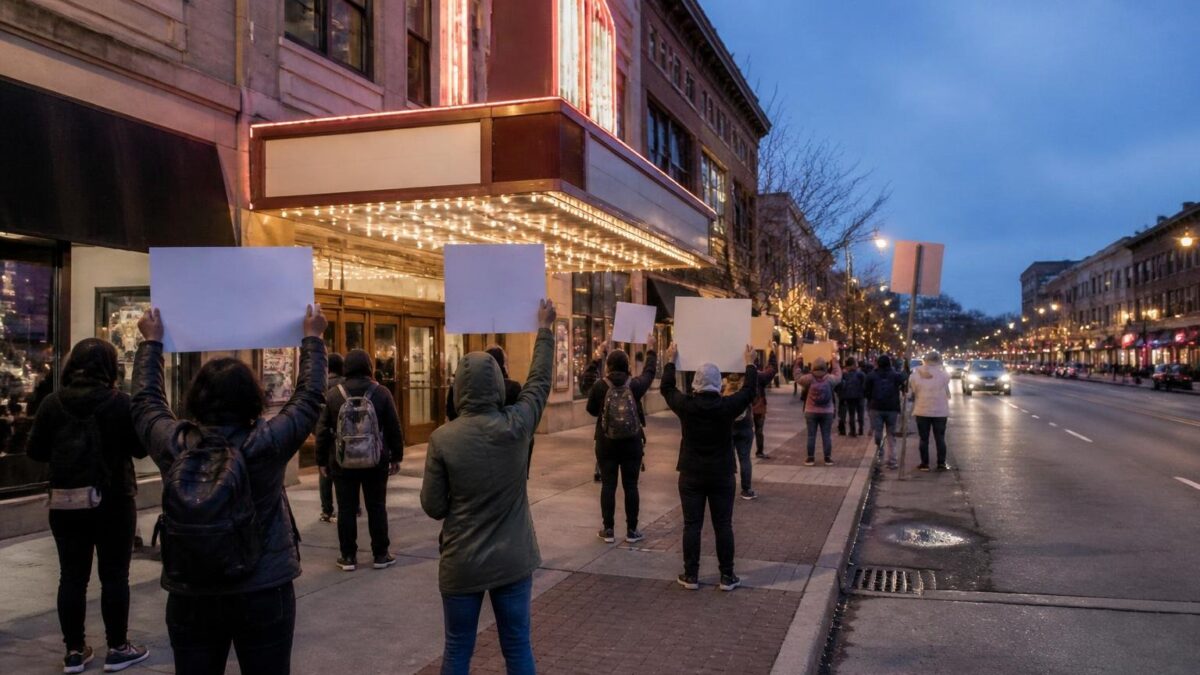
A group of protesters gathered outside the Suffolk Theater in Riverhead ahead of a scheduled performance by Roger Waters, the former Pink Floyd bassist whose political statements and advocacy have drawn criticism in recent years. The demonstration marked a rare instance of organized opposition to a cultural event at the downtown venue.
Demonstrators assembled on Main Street before the concert, holding signs and engaging with passersby. The protest centered on Waters’ public statements regarding international conflicts and his participation in boycott movements, which critics argue cross into territory they find objectionable.
Community Response to Controversial Figure
The Suffolk Theater, a restored 1933 movie palace that serves as a cornerstone of Riverhead’s downtown revitalization efforts, regularly hosts nationally recognized performers. The Waters appearance represented one of the venue’s higher-profile bookings in recent months, drawing ticket holders from across Long Island and beyond.
Protesters organized their demonstration to coincide with the arrival of concertgoers, seeking to raise awareness about positions Waters has taken on political matters. The former rock musician has been vocal about international affairs and has aligned himself with movements that advocate for economic and cultural boycotts.
Local residents expressed mixed reactions to both the concert and the protest. Some defended the right of the theater to book artists based on their musical merit, while others sympathized with the concerns raised by demonstrators about giving a platform to controversial figures.
Suffolk Theater’s Role in Downtown Riverhead
The 1,500-seat Suffolk Theater underwent extensive renovations and reopened in 2013 as part of broader efforts to revive Riverhead’s Main Street corridor. The venue has since become a cultural anchor for the town, hosting concerts, comedy shows, film screenings, and community events throughout the year.
Theater management typically refrains from commenting on the political views of performers, focusing instead on presenting diverse entertainment options for Suffolk County residents. The venue operates as a privately managed facility that books acts based on audience demand and artistic reputation.
Riverhead’s downtown area has experienced gradual economic growth since the theater’s reopening, with new restaurants, shops, and residential developments contributing to increased foot traffic. Cultural events at the Suffolk Theater play a measurable role in this economic activity, drawing visitors who patronize surrounding businesses.
Waters’ Controversial Public Positions
Roger Waters rose to fame as a founding member and primary creative force behind Pink Floyd, one of rock music’s most commercially successful acts. Following his departure from the band in the 1980s, he pursued a solo career while becoming increasingly outspoken about political causes.
His advocacy work has focused particularly on international conflicts and human rights issues. Waters has participated in boycott, divestment, and sanctions movements, positions that have drawn both support from some activist communities and sharp criticism from others who view his stances as one-sided or harmful.
The musician has defended his right to express political views, arguing that artists have a responsibility to speak out on matters of conscience. His concerts often incorporate political imagery and messages, blending musical performance with advocacy in ways that some audience members embrace and others find divisive.
Free Speech and Public Venues
The protest outside the Suffolk Theater raised broader questions about how communities balance artistic freedom, political speech, and public sensibilities when it comes to booking performers at local venues. These tensions have surfaced in communities nationwide as cultural institutions navigate increasingly polarized political landscapes.
Proponents of unrestricted artistic programming argue that theaters should present performers based on their creative work rather than their political opinions. This perspective holds that audience members can make individual choices about which events to attend without requiring venues to serve as ideological gatekeepers.
Those who advocate for more selective booking policies contend that providing a platform carries implicit endorsement, particularly when controversial figures use performances to promote specific political agendas. They argue that community venues have obligations to consider the impact of their programming decisions beyond purely commercial or artistic criteria.
Impact on Local Business District
The evening’s events unfolded along Main Street, where the theater sits among a growing collection of restaurants, bars, and retail establishments that have opened in recent years. Riverhead town officials have invested significantly in infrastructure improvements and business incentives designed to transform the downtown from a largely daytime government center into an evening destination.
Events at the Suffolk Theater generate substantial economic activity for surrounding businesses, particularly restaurants that see increased traffic before and after performances. Concert nights typically draw several hundred visitors to the downtown area, many of whom arrive early for dinner or remain afterward for drinks.
Local business owners generally avoid taking public positions on the politics of individual performers, focusing instead on the economic benefits that cultural events bring to the district. The long-term success of downtown revitalization efforts depends partly on the theater’s ability to maintain a consistent schedule of well-attended performances.
Precedent and Future Considerations
The demonstration represented an unusual occurrence for the Suffolk Theater, which typically operates without organized protest activity. Most performances proceed without controversy, drawing audiences interested primarily in entertainment rather than political messaging.
How the theater responds to community concerns about controversial performers may influence future booking decisions and policies. Similar venues across the country have adopted various approaches, from maintaining strict neutrality on performer politics to implementing community advisory processes for potentially divisive bookings.
The Waters concert proceeded as scheduled, with ticket holders entering the venue while demonstrators maintained their presence outside. The event highlighted ongoing tensions between artistic expression, political advocacy, and community values that show no signs of easy resolution in an increasingly divided cultural landscape.
Riverhead police provided a presence to ensure public safety but reported no incidents requiring intervention. Both concertgoers and protesters exercised their rights peacefully, reflecting a community capable of accommodating different perspectives even on contentious matters.