
Suffolk Police, Sheriff’s Office Receive $2M Fleet Upgrade

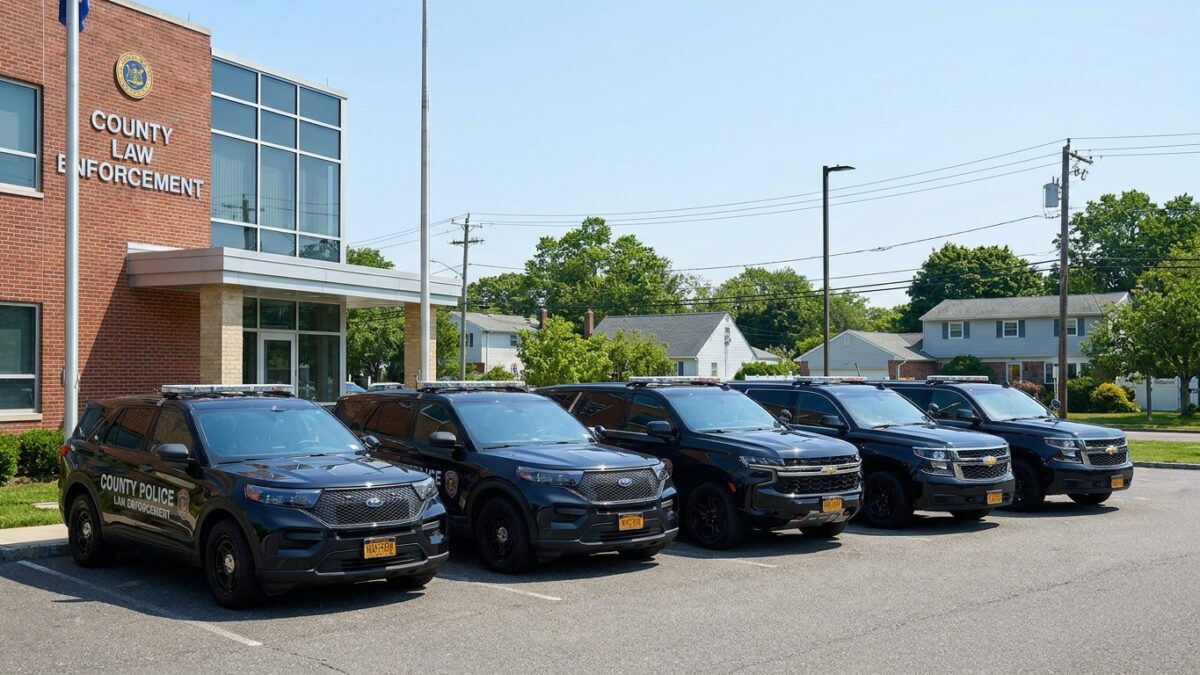
Suffolk County law enforcement agencies are preparing for a significant modernization effort as the county allocates $2 million for fleet upgrades across the Suffolk County Police Department and the Sheriff’s Office. The funding will support the acquisition of new patrol vehicles and specialized equipment to replace aging units currently in service across the South Shore and East End communities.
The investment comes as both agencies have faced mounting maintenance costs and operational challenges with their existing fleets. County officials have emphasized that reliable transportation is essential for timely emergency response and effective policing throughout Suffolk’s sprawling 912 square miles of jurisdiction.
Fleet Replacement Addresses Aging Infrastructure
The $2 million allocation will fund the purchase of multiple patrol vehicles for both the Police Department and Sheriff’s Office. Current fleet assessments have identified numerous vehicles that have exceeded their recommended service life or accumulated mileage that makes continued operation both costly and potentially unreliable.
Law enforcement vehicles typically face accelerated wear compared to civilian counterparts due to extended idling periods, frequent starts and stops, and the additional weight of equipment including computers, radios, emergency lighting systems, and safety gear. Industry standards suggest patrol vehicles should be replaced after approximately 100,000 miles or five to seven years of service, whichever comes first.
The Sheriff’s Office, which handles court security, civil process serving, and corrections transport throughout the county, has identified particular needs for reliable transportation given the daily movement of inmates and court personnel. The department’s responsibilities span from the western border communities to the eastern tips of the North and South Forks.
Operational Impact on South Shore Communities
For South Shore residents, the fleet upgrade carries practical implications for public safety response times and law enforcement visibility. Communities including Babylon, Islip, Brookhaven, and the Fire Island barrier islands all depend on Suffolk County Police for primary law enforcement services.
Response time reliability becomes especially critical during severe weather events, which have increased in frequency and intensity along the coastal communities. Officers require dependable vehicles capable of navigating flooded roadways, winter storms, and hurricane evacuations. The South Shore’s vulnerability to coastal flooding and nor’easters places additional demands on patrol vehicle durability.
The Sheriff’s Office maintains a visible presence at county facilities including courthouses in Central Islip and Riverhead, where reliable transportation supports the movement of detained individuals and court security operations. Daily transport routes connect detention facilities with court appearances, medical appointments, and inter-agency transfers.
Procurement Process and Vehicle Specifications
The vehicle procurement process typically involves detailed specifications developed by law enforcement agencies in consultation with county purchasing departments. Suffolk County follows New York State procurement guidelines, which may allow the use of state contract pricing to streamline purchases and achieve cost savings.
Modern police vehicles incorporate numerous specialized features beyond civilian models. Modifications typically include:
- Reinforced suspensions to handle additional equipment weight
- Heavy-duty electrical systems supporting computers, radios, and emergency lighting
- Partition systems separating front and rear compartments
- Specialized seats designed for officers wearing duty belts
- Integrated push bumpers and spotlight systems
- Advanced safety features including stability control and all-wheel drive options
Vehicle selection often balances multiple factors including fuel efficiency, maintenance costs, interior space for equipment, and performance capabilities. Many agencies have transitioned toward sport utility vehicles for patrol use, citing improved visibility, all-weather capability, and equipment storage compared to traditional sedans.
Budget Context and Long-Term Planning
The $2 million fleet investment represents one component of Suffolk County’s broader capital budget, which addresses infrastructure and equipment needs across multiple departments. County budget officials have emphasized the importance of systematic fleet replacement to avoid the higher costs associated with emergency purchases when vehicles fail unexpectedly.
Fleet management best practices recommend that agencies maintain rolling replacement schedules rather than allowing entire fleets to age simultaneously. This approach spreads costs over multiple budget cycles and ensures a mix of newer and older vehicles remains in service at any given time.
Suffolk County’s fiscal planning occurs within constraints including state-mandated tax cap provisions and competing demands for resources across education, social services, infrastructure, and public safety sectors. Law enforcement fleet needs must be balanced against road repairs, facility maintenance, and technology upgrades across county operations.
Regional Context and Comparative Spending
Suffolk County’s $2 million fleet allocation can be viewed alongside similar investments by neighboring Nassau County and New York City agencies. Nassau County Police recently underwent their own fleet modernization efforts, while the NYPD maintains one of the nation’s largest municipal vehicle fleets with ongoing replacement cycles.
Long Island’s geography creates unique challenges compared to more compact urban jurisdictions. The extended distances between the western border and eastern communities like Montauk or Orient Point require vehicles capable of sustained highway operation and reliable performance over extended duty shifts.
The South Shore’s seasonal population fluctuations, with summer surges in communities including Fire Island, the Hamptons, and coastal areas, place additional demands on law enforcement resources. Adequate fleet capacity ensures agencies can scale operations to match seasonal demands without vehicle shortages.
Environmental Considerations and Future Planning
Fleet modernization offers opportunities for incorporating more fuel-efficient and environmentally conscious vehicles. Many law enforcement agencies nationwide have begun testing hybrid and electric vehicle options for patrol use, though range limitations and charging infrastructure requirements present challenges for agencies covering large geographic areas.
Suffolk County’s coastal location and commitment to environmental protection create incentives for considering lower-emission vehicles where operationally feasible. However, the demanding duty cycles and extended range requirements of police work mean that conventional gasoline and diesel powertrains remain the primary options for most patrol applications.
The timeline for vehicle delivery and deployment will depend on manufacturing schedules and upfitting requirements. Specialized emergency equipment installation, radio integration, and vehicle graphics application typically require several weeks per vehicle following delivery from manufacturers.