
Over 100 Hopefuls Turn Out for Long Island Nets Local Tryouts

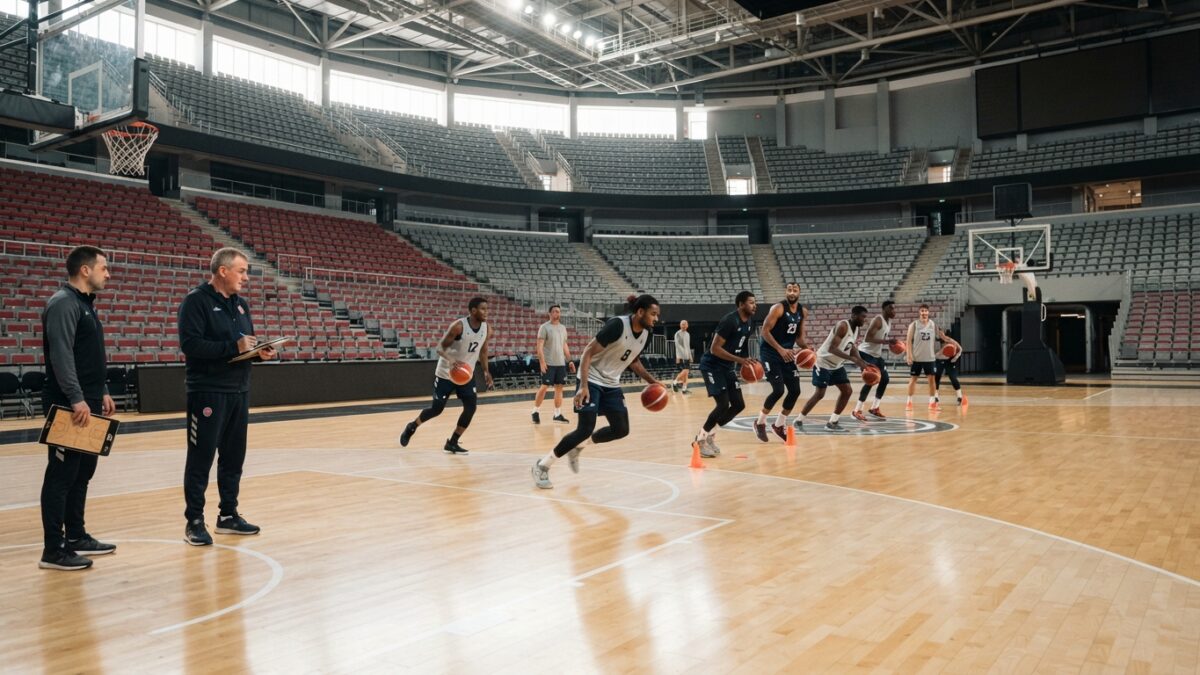
The Long Island Nets held local player tryouts this week with an impressive turnout of over 100 aspiring basketball players seeking opportunities with the Brooklyn Nets’ G League affiliate. Head Coach Ronnie Swords oversaw the evaluations while addressing questions about two-way contracts and the league’s expansion into Canada.
The tryout session attracted talent from across the region, reflecting both the competitive nature of professional basketball pathways and the Long Island Nets’ role as a developmental pipeline for NBA-caliber players. The team, which plays its home games at Nassau Veterans Memorial Coliseum in Uniondale, serves as the official NBA G League affiliate of the Brooklyn Nets.
Coach Swords Evaluates Local Talent Pool
Ronnie Swords, entering another season at the helm of the Long Island Nets, led the evaluation process as dozens of players showcased their skills. The tryouts represent one of the few open opportunities for unsigned players to earn professional contracts through direct competition rather than traditional scouting channels.
The G League has increasingly become a viable alternative pathway to the NBA, with developmental contracts offering players professional coaching, competitive play, and exposure to NBA scouts. For local players from Long Island and surrounding areas, the tryouts represent a chance to pursue professional basketball without relocating far from home.
Swords has built a reputation for identifying overlooked talent during his tenure with the organization. The coaching staff evaluates participants on multiple dimensions including athleticism, basketball IQ, shooting ability, defensive awareness, and coachability during the intensive tryout sessions.
Two-Way Contracts Under Discussion
During the tryouts, Coach Swords addressed the topic of two-way contracts, which have become an increasingly important mechanism in professional basketball. These contracts allow players to split time between an NBA team and its G League affiliate, providing developmental opportunities while maintaining eligibility for major league play.
Under current NBA rules, each franchise can sign up to three players to two-way contracts. These athletes can spend up to 50 games with the NBA team while developing their skills with the G League affiliate. The arrangement benefits both players seeking NBA exposure and teams looking to develop talent within their organizational system.
For the Brooklyn Nets organization, two-way contracts have proven valuable in recent years for evaluating players in competitive settings before making long-term roster commitments. Several players who began their careers on two-way deals have eventually earned standard NBA contracts.
The financial structure of two-way contracts has also evolved. Players on these deals now earn a prorated portion of the NBA minimum salary while with the major league team, making them more lucrative than standard G League contracts. This economic reality makes competition for these spots particularly intense.
G League Expansion into Canada
Swords also discussed the G League’s expansion efforts into Canada during the tryout proceedings. The NBA’s developmental league has shown growing interest in establishing a presence north of the border, following the success of the Toronto Raptors in cultivating basketball interest throughout Canada.
The expansion discussions reflect broader trends in professional basketball’s growth. Canada has produced an increasing number of NBA players in recent years, and the country’s basketball infrastructure continues to develop. A Canadian G League franchise would provide additional development opportunities for homegrown talent while expanding the league’s geographic footprint.
For organizations like the Long Island Nets, international expansion could create new competitive dynamics and potentially affect scheduling, travel logistics, and roster construction. The G League currently operates teams across the United States, with most franchises located in mid-sized markets that can support professional minor league sports.
Long Island’s Basketball Development Role
The Long Island Nets have established themselves as an important piece of the Brooklyn Nets’ player development infrastructure since relocating to Nassau Coliseum. The facility provides professional-grade training facilities and game conditions that prepare players for potential NBA call-ups.
Nassau Coliseum has a storied history in professional sports, previously serving as home to the New York Islanders of the NHL. The venue’s transformation into a basketball facility has helped maintain its relevance in the Long Island sports landscape while providing the G League team with a legitimate home court atmosphere.
For local basketball fans, the Long Island Nets offer affordable access to professional basketball and the opportunity to watch future NBA talent in development. Many players who suit up for the team eventually see action with the Brooklyn Nets or other NBA franchises, making the G League an intriguing talent incubator.
The Competitive Reality of Professional Tryouts
While over 100 players attended the tryouts, the mathematical reality remains stark. G League rosters typically carry between 10 and 12 players during the regular season, with most spots already allocated to returning players, draft picks, or players with NBA camp invitations.
Tryout participants typically compete for one or two available roster spots, making the selection rate extremely low. However, even players who do not make the immediate roster may be added to training camp lists, affiliate player pools, or consideration for future opportunities if injuries or roster moves create openings.
The G League also maintains relationships with international leagues, meaning strong performances at tryouts can sometimes lead to professional opportunities overseas even if an immediate G League contract does not materialize. For many participants, the tryout represents a chance to be evaluated by professional coaches and potentially receive feedback that shapes their continued development.
The Long Island Nets have not yet announced which players, if any, earned contracts through the tryout process. Training camp rosters and final team compositions typically take shape in the weeks leading up to the G League season opener, which generally begins in early November.